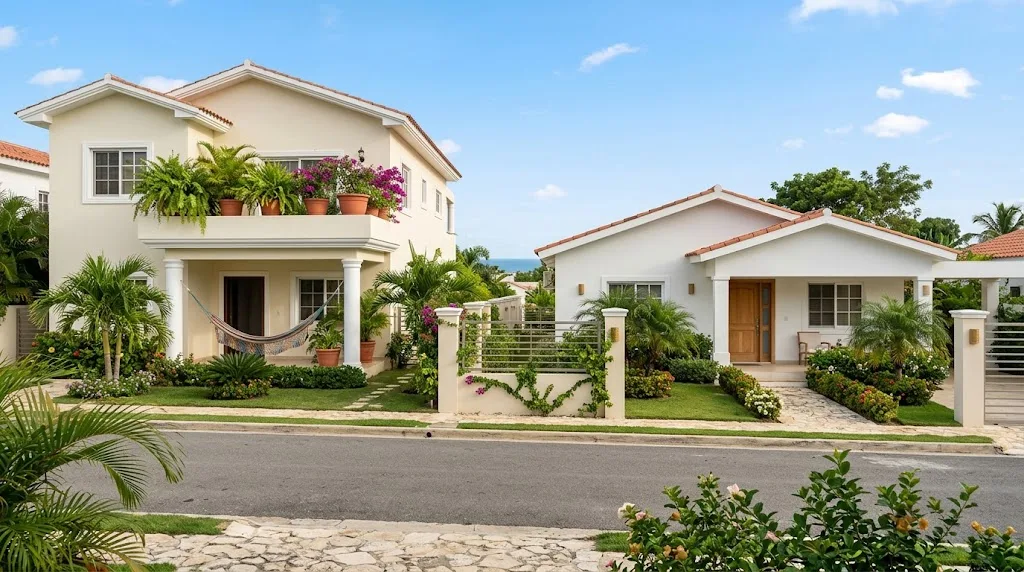
How to buy property in the Dominican Republic from abroad
Many of my clients live outside the country. Some are Dominicans in New York, Madrid or Boston who want a home to come back to or to invest in. Others are foreigners who fell in love with Punta Cana or Las Terrenas. They all ask me the same question: can I buy without being there?
Yes. With good organization, almost everything can be done remotely. Here is how.
Who can buy
A foreigner has the same rights as a Dominican to buy property in the country (Law 16-95). A valid passport is enough. You do not need residency or a Dominican bank account to sign.
If you are a Dominican living abroad, you buy like any Dominican, with your identity document or your passport.
The purchase taxes are the same for everyone. In the article on what it really costs to buy a home I explain each cost.
The search, by video call
We start with a virtual appointment to understand what you are looking for: area, budget, and whether it is to live in, to rent out or for retirement. With that, I send you options that truly fit.
For the ones you like, I show you the property on a live video, so you can see what photos do not show: the street, the view from the balcony, the condition of the kitchen. Many clients come only once, to see the two or three finalists, and others buy without traveling at all.
The legal review, before you pay
Buying remotely calls for more care with the documents, not less. Before any money changes hands, we confirm:
- That the seller is the owner, with the title certificate.
- That the property has no mortgages, liens or debts, with the certificate of legal status issued by the Title Registry.
- That the property taxes are up to date.
- For an off-plan project, that it has its permits and, if it uses one, a trust.
Never send money for a property that has not been reviewed, however good the offer looks.
The signing, with a power of attorney
So that you do not have to travel to sign, you authorize a trusted person in the country through a power of attorney. It states exactly what that person may do: sign the purchase of a specific property, for a specific price.
There are two ways to make it valid:
- With an apostille. You sign it before a notary in your country and then have it apostilled by the competent office. The Dominican Republic accepts the apostille.
- At the Dominican consulate. You sign it directly at the consulate in the city where you live.
The power of attorney is then translated into Spanish if needed and sent by courier. Allow a few weeks for the whole process, so it is best to start early.
The money
- Send it by bank transfer from an account in your name. Banks and notaries must ask for the origin of the funds (Law 155-17), and a transfer from your own account makes that easy.
- Pay into company or trust accounts, never into an intermediary's personal account.
- Keep every receipt. You will need them for the registration and, in your country, for your own taxes.
- Many properties in tourist areas are priced in dollars and others in pesos. Ask which currency each stage is paid in.
If you need a loan
Some Dominican banks offer loans to Dominicans living abroad and to foreigners. They usually ask for a larger down payment, proof of income from your country and a longer approval time. You can make a first estimate with the mortgage calculator.
After you buy
- If you will rent it out, that income is taxed in the Dominican Republic, and it is worth having someone manage the property.
- The property tax (IPI) and maintenance fees can be paid remotely.
- There is a residency by investment for foreigners. If you are interested, I can explain the current requirements.
How I help
As a lawyer by training with more than 20 years in real estate, I organize the purchase so you can do it from where you are: the search, the document review, the power of attorney, the closing and the handover. You can read the buyer's guide to see the whole process, or write to me to talk about your case.
Comments
No comments yet. Be the first to comment.
Monthly newsletter
Once a month: new properties, market news and tips for buying, selling or renting. You can unsubscribe at any time.